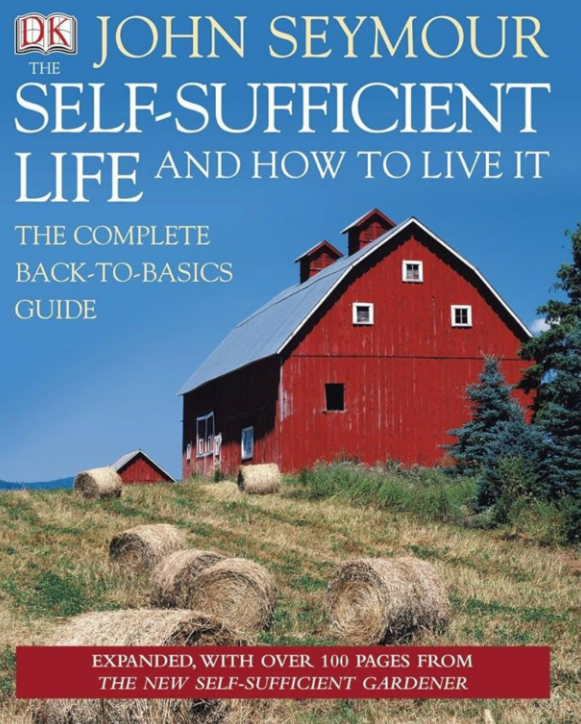
If there is one book that has inspired generations of people to leave the comfort of dependency and move closer to land, food, and self-reliance, it is The Self‑Sufficient Life and How to Live It by John Seymour.
Written decades ago, this book is surprisingly relevant even today—especially for anyone building or dreaming of a farm, homestead, or intentional rural life. What makes this book special is that it doesn’t sell fantasy. It offers clear, practical, sometimes hard-truth guidance on what it really takes to live a self-sufficient life.
At Vaksana Farms, while we may not aim for complete self-sufficiency, many of Seymour’s principles quietly shape how we grow food, raise animals, design spaces, and think about long-term sustainability.
Below are the most practical, implementable lessons from the book—ideas that readers can genuinely apply, whether they own acres of land or just a backyard.
1. Self-Sufficiency Is a Direction, Not a Destination
One of the most refreshing ideas in the book is this:
You don’t have to be 100% self-sufficient to live meaningfully.
John Seymour repeatedly emphasizes partial self-sufficiency—doing what you can, where you are.
Practical takeaway:
- Grow some of your food
- Preserve some of what you grow
- Repair some of what you use
- Learn some forgotten skills
- At Vaksana Farms, we don’t claim to be fully self-reliant—but we grow vegetables, compost waste, reuse water, and make conscious choices. This balance keeps the farm practical, not performative.
2. Start With Food — Everything Else Follows
The book places food at the very center of self-sufficient living. Before animals, buildings, or tools, Seymour asks one question:
> Can you feed yourself?
Practical takeaway:
- Start with easy, reliable crops
- Focus on vegetables that grow well in your climate
- Learn seasonal eating instead of forcing year-round variety
- This idea mirrors how food works at Vaksana Farms—simple, seasonal, farm-to-table meals using what grows naturally, rather than chasing complexity.
3. Grow What Grows Easily (Not What Looks Fancy)
Seymour strongly warns against romantic farming choices driven by aesthetics or trends.
Practical takeaway:
- Choose crops and animals that thrive naturally in your region
- Avoid exotic varieties unless you are ready for extra work
- Productivity beats perfection
This lesson is especially relevant in India, where traditional crops often outperform imported ideas. At Vaksana Farms, many decisions—what to plant, what animals to raise—come from observation, not Instagram inspiration.
4. Animals Are a Responsibility Before They Are a Benefit
The book is very honest about farm animals. They are not decorations. They demand time, discipline, and daily care.
Practical takeaway:
- Never start with many animals at once
- Understand feeding, breeding, healthcare, and waste management
- Ask yourself: Can I care for this animal even on my worst day?
This realism strongly resonates with our experience at Vaksana Farms, where animals are treated as long-term companions, not attractions.
5. Learn to Preserve — Because Abundance Is Seasonal
One of the most valuable sections of the book focuses on food preservation—a skill often forgotten today.
Practical takeaway:
- Learn basic pickling, drying, fermenting, and storing
- Preserve surplus instead of wasting it
- Think in cycles, not daily convenience
At Vaksana Farms, traditional methods of cooking and preserving remind us that abundance comes in waves—and wisdom lies in preparation.
6. Build Simply, Build Slowly
Seymour discourages over-building and unnecessary infrastructure. His approach is refreshingly minimal.
Practical takeaway:
- Build only what you need, not what impresses others
- Use local materials where possible
- Let structures evolve with use
This philosophy deeply aligns with how spaces at Vaksana Farms grow organically—responding to people, seasons, and purpose rather than rigid master plans.
7. Skills Matter More Than Money
A powerful idea throughout the book is that skills reduce dependence far more than income.
Practical takeaway:
- Learn basic repairs
- Understand soil, tools, and simple mechanics
- Don’t outsource everything immediately
Many farm challenges are solved not with money—but with observation, patience, and learning. This is something we witness repeatedly at Vaksana Farms.
8. Self-Sufficient Living Is Hard Work — And That’s the Point
John Seymour never sugarcoats farm life. It’s physically demanding, mentally engaging, and emotionally grounding.
Practical takeaway:
- Expect tiredness
- Expect mistakes
- Expect learning through failure
The joy doesn’t come from ease—it comes from earned satisfaction. This is something guests often feel during hands-on activities at Vaksana Farms.
9. Community Is Part of Self-Sufficiency
Contrary to popular belief, the book does not promote isolation.
Practical takeaway:
- Exchange skills and produce
- Learn from neighbours
- Share surplus
True self-sufficiency includes interdependence, something rural communities have practiced for centuries—and something farms like Vaksana try to preserve.
10. A Self-Sufficient Life Changes How You Measure Success
Perhaps the most important lesson is philosophical.
Seymour quietly redefines success as:
- Enough food
- Useful work
- Good health
- Meaningful days
Not scale. Not speed. Not excess.
Why This Book Matters Today
In a time where convenience is mistaken for progress, The Self-Sufficient Life and How to Live It gently reminds us that resilience comes from simplicity. For anyone dreaming of a farm, building a homestead, or even just wanting to live a little closer to nature, this book offers something rare: A practical roadmap grounded in humility, effort, and respect for land. At Vaksana Farms, many of these ideas are lived quietly every day—not as ideology, but as a way of life.